Can Fatty Liver Lead to liver cirrhosis | Dr. Vikas raikwar
Fatty liver disease is becoming an important health concern due to changing lifestyles, unhealthy diets, and increasing metabolic disorders. Although early fatty liver may cause little damage, certain cases can progress to serious liver complications.
One major concern is liver cirrhosis, a condition involving permanent scarring of liver tissue. However, not everyone with fatty liver develops cirrhosis. The risk depends on inflammation, existing liver damage, metabolic health, and alcohol consumption.
Understanding the stages of fatty liver disease can help people recognise potential risks and seek timely medical care. If you are searching for the Best liver specialist in Bhopal, learning about prevention and early diagnosis is a useful first step.
What Is Fatty Liver Disease?
Fatty liver disease occurs when excess fat accumulates inside liver cells. It can develop due to metabolic conditions, such as obesity and diabetes, or excessive alcohol consumption.
Metabolic dysfunction-associated steatotic liver disease (MASLD) is the current term for fatty liver associated with metabolic risk factors. Alcohol-associated liver disease develops when alcohol damages the liver.
Initially, fatty liver may cause no noticeable symptoms. Therefore, many people discover the condition during routine blood tests or abdominal imaging.
However, some patients develop inflammation and liver cell injury. This more serious stage can lead to fibrosis and, in advanced cases, cirrhosis.
Can Fatty Liver Lead to Liver Cirrhosis?
Yes, certain forms of fatty liver disease can progress to liver cirrhosis. However, this progression does not happen in every patient.
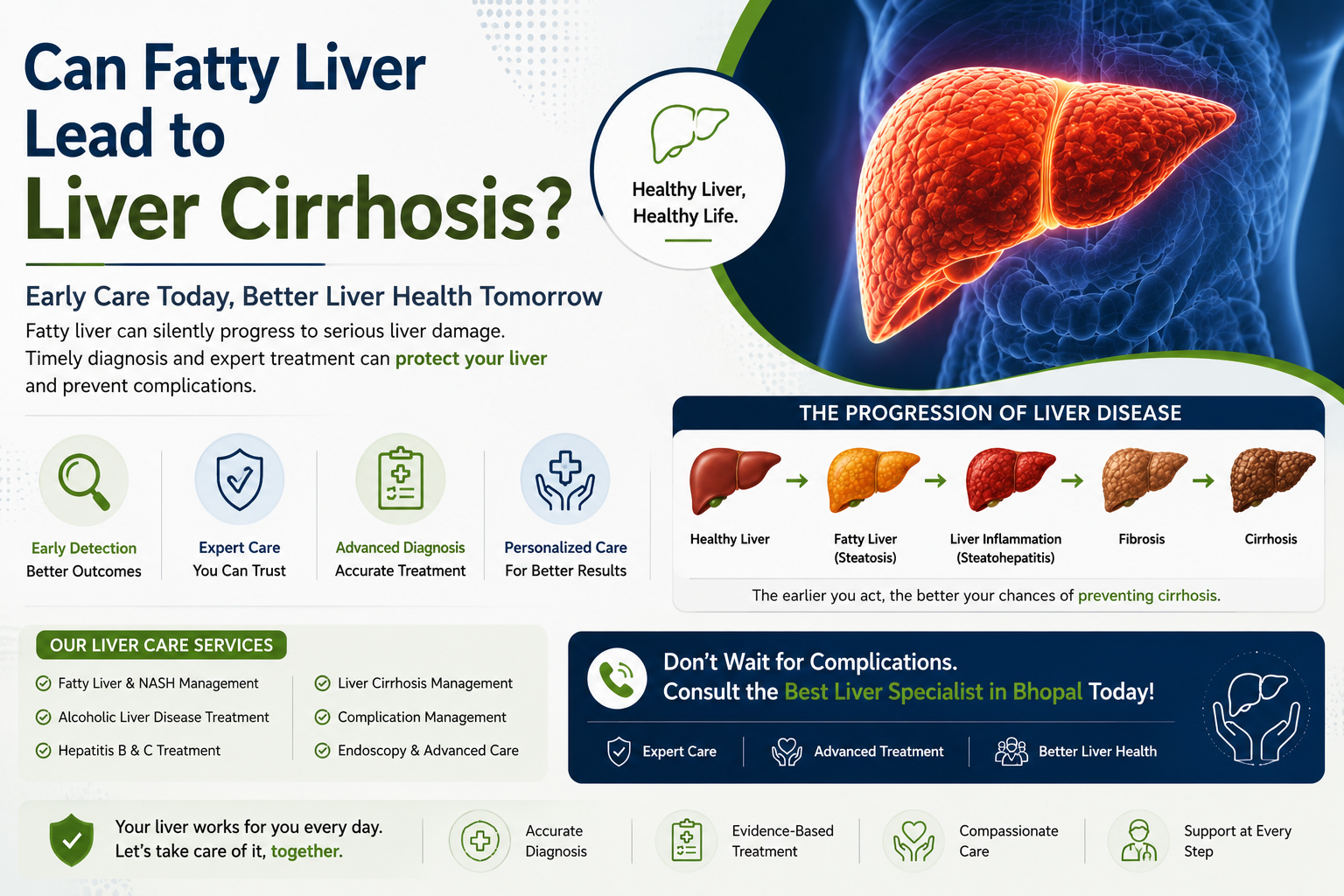
In some people, fat accumulates without significant inflammation or liver injury. Others develop steatohepatitis, which involves inflammation and damage to liver cells.
Over time, persistent inflammation can cause fibrosis, meaning scar tissue develops within the liver. If the scarring becomes extensive, it may progress to cirrhosis.
Cirrhosis can interfere with essential liver functions, including processing nutrients, producing proteins, and removing harmful substances from the blood.
Early diagnosis is therefore important. Appropriate medical care can address underlying causes and help reduce the risk of further liver damage.
Stages of Fatty Liver Disease
Understanding disease progression helps explain why regular medical assessment matters
1. Simple Fatty Liver
In this early stage, excess fat accumulates in liver cells. Many patients have no symptoms, and significant inflammation may be absent.
Lifestyle improvements can help reduce liver fat, particularly when metabolic risk factors are addressed.
2. Steatohepatitis
At this stage, fat accumulation occurs alongside inflammation and liver cell injury. Metabolic dysfunction-associated steatohepatitis (MASH) and alcohol-associated hepatitis are important forms of inflammatory liver disease.
Without appropriate management, ongoing injury may increase the risk of scarring.
3. Liver Fibrosis
Fibrosis develops when repeated liver injury leads to scar tissue formation. Its severity varies, and early fibrosis may improve when the underlying cause is effectively treated.
Nevertheless, advanced fibrosis requires careful evaluation and monitoring.
4. Liver Cirrhosis
Cirrhosis represents advanced, extensive liver scarring. It can lead to complications such as fluid accumulation, internal bleeding, impaired liver function, and increased liver cancer risk.
Although established cirrhosis generally involves permanent scarring, treating its underlying cause can help prevent further damage.
Warning Signs of Advanced Liver Disease
Fatty liver often develops without clear symptoms. However, advanced liver disease may cause noticeable changes.
Watch for the following warning signs:
- Persistent fatigue and weakness
- Yellowing of the skin or eyes
- Swelling in the abdomen, legs, or ankles
- Easy bruising or unusual bleeding
- Dark urine or pale stools
- Reduced appetite or unexplained weight loss
Seek urgent medical attention for vomiting blood, black stools, or new confusion. These symptoms may indicate serious complications.
How Can You Reduce the Risk of Liver Cirrhosis?
Although some risk factors cannot be changed, several practical steps can support liver health.
- Maintain a healthy weight: If you have excess weight, gradual weight loss may reduce liver fat and inflammation.
- Follow a balanced diet: Include vegetables, fruits, whole grains, and suitable protein sources. Limit sugary drinks and highly processed foods.
- Exercise regularly: Aim for consistent physical activity suited to your health and fitness level.
- Avoid alcohol: Alcohol can worsen liver injury. People with alcohol-associated liver disease should stop drinking and seek medical support when needed.
- Manage existing conditions: Keep diabetes, high cholesterol, and blood pressure under appropriate medical control.
- Attend regular check-ups: Your doctor may recommend blood tests, ultrasound, fibrosis assessment, or other investigations according to your individual risk.
Avoid unverified liver detox products and herbal supplements. Some products can cause additional liver damage.
Liver Treatment in Bhopal: When Should You Consult a Specialist?
If your reports show fatty liver, persistently abnormal liver enzymes, or signs of advanced disease, consult a qualified gastroenterologist or liver specialist.
Patients looking for the Best liver hospital in Bhopal should consider access to diagnostic investigations, specialist consultations, and appropriate treatment facilities.
A liver specialist may assess your medical history, alcohol intake, metabolic health, and test results. Depending on your condition, treatment may involve lifestyle changes, managing associated diseases, alcohol cessation support, or treatment for complications.
For individuals seeking Alcoholic liver disease treatment in Bhopal, early medical evaluation is particularly important. Patients with alcohol dependence may need supervised support when stopping alcohol.
Dr. Vikas Raikwar provides a relevant specialist consultation option for people exploring liver care in Bhopal. If you need liver treatment in Bhopal, discuss your symptoms and investigation reports with a qualified medical professional.
Conclusion
Fatty liver can progress to liver cirrhosis when ongoing inflammation and liver injury cause extensive scarring. However, progression is not inevitable, and early intervention can make a meaningful difference.
Healthy lifestyle habits, alcohol avoidance, appropriate testing, and timely medical guidance can support better liver health.
If you have fatty liver or persistent liver abnormalities, do not ignore them. Consult a qualified liver specialist to understand your condition and discuss an appropriate treatment plan.
Medical disclaimer: This article is for educational purposes only and does not replace professional medical advice, diagnosis, or treatment.